
I wanted more charging power in the 12 V system, so I decided to upgrade. What surprised me was how much there was to learn.
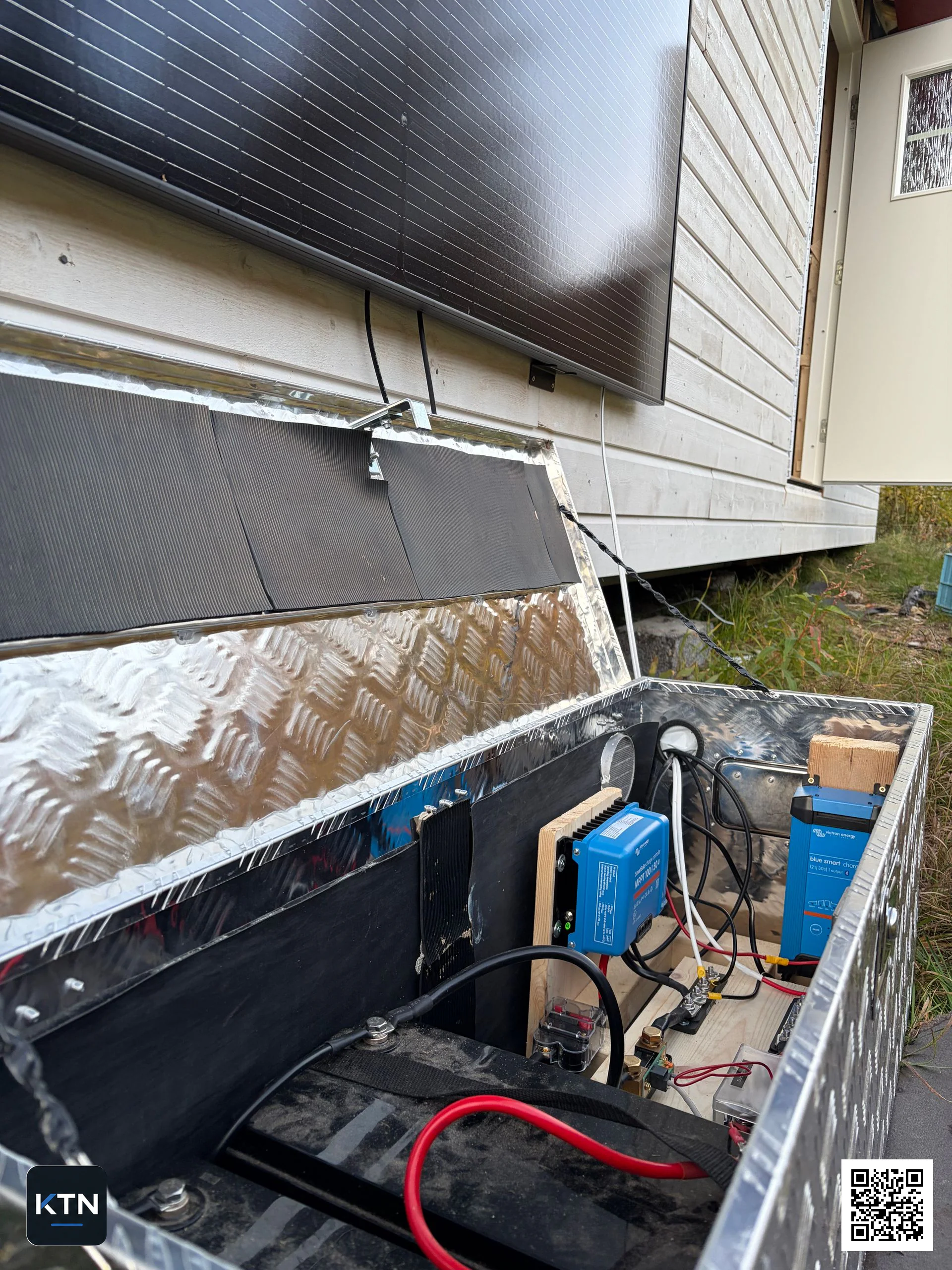
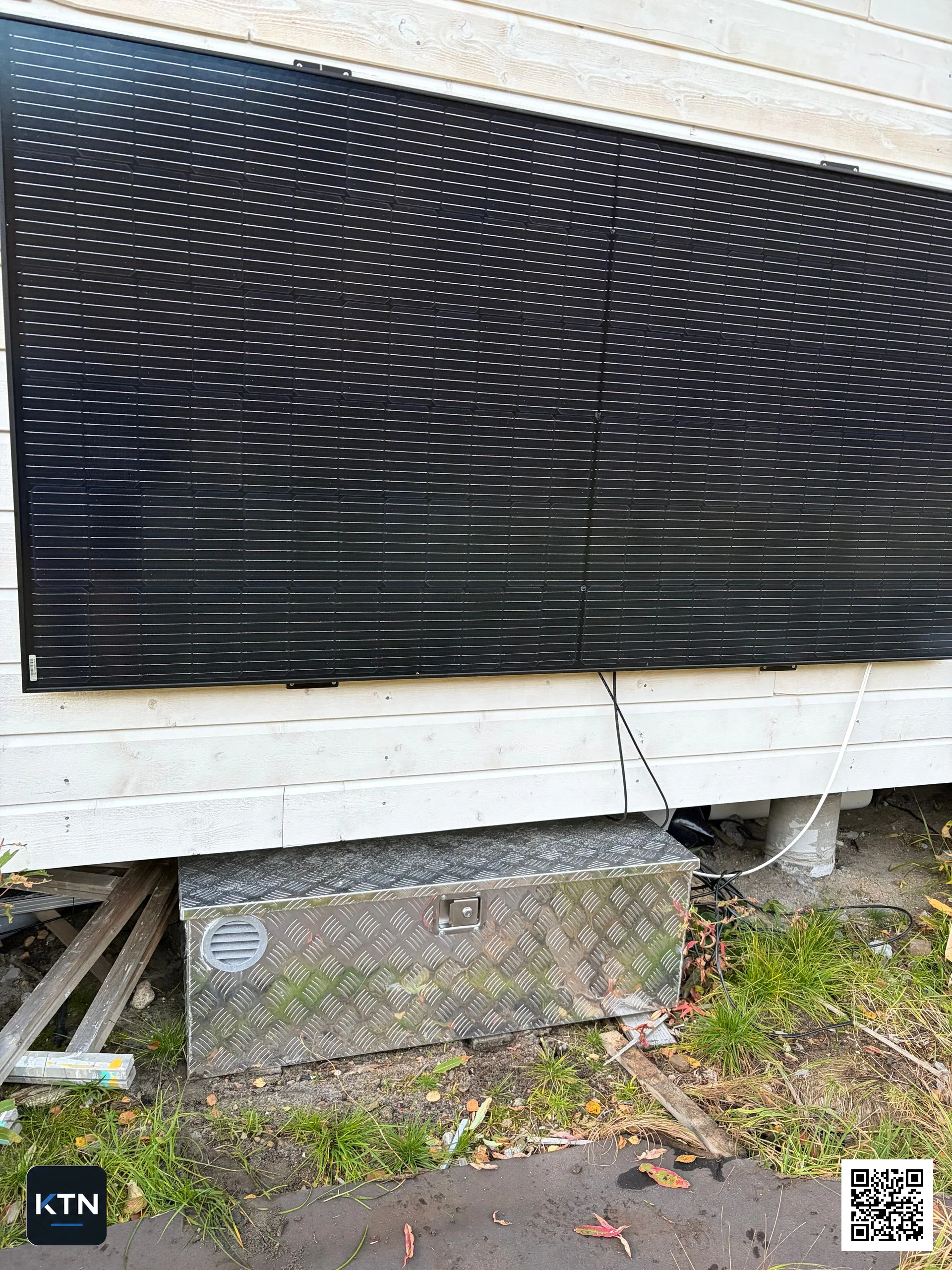
Solar panel
When I compared panels, the price difference between a smaller panel and a 450 W one was surprisingly small. A more powerful panel can place higher demands on the charge controller.
I chose a 450 W PERC panel:
- Maximum power: 450 Wp
- Open-circuit voltage (Voc): 49.3 V
- Short-circuit current (Isc): 11.59 A
- Voltage at maximum power (Vmp): 41.4 V
- Current at maximum power (Imp): 10.88 A
Since this is a 12 V system, almost 50 V can seem excessive. This is where the choice of charge controller becomes decisive.
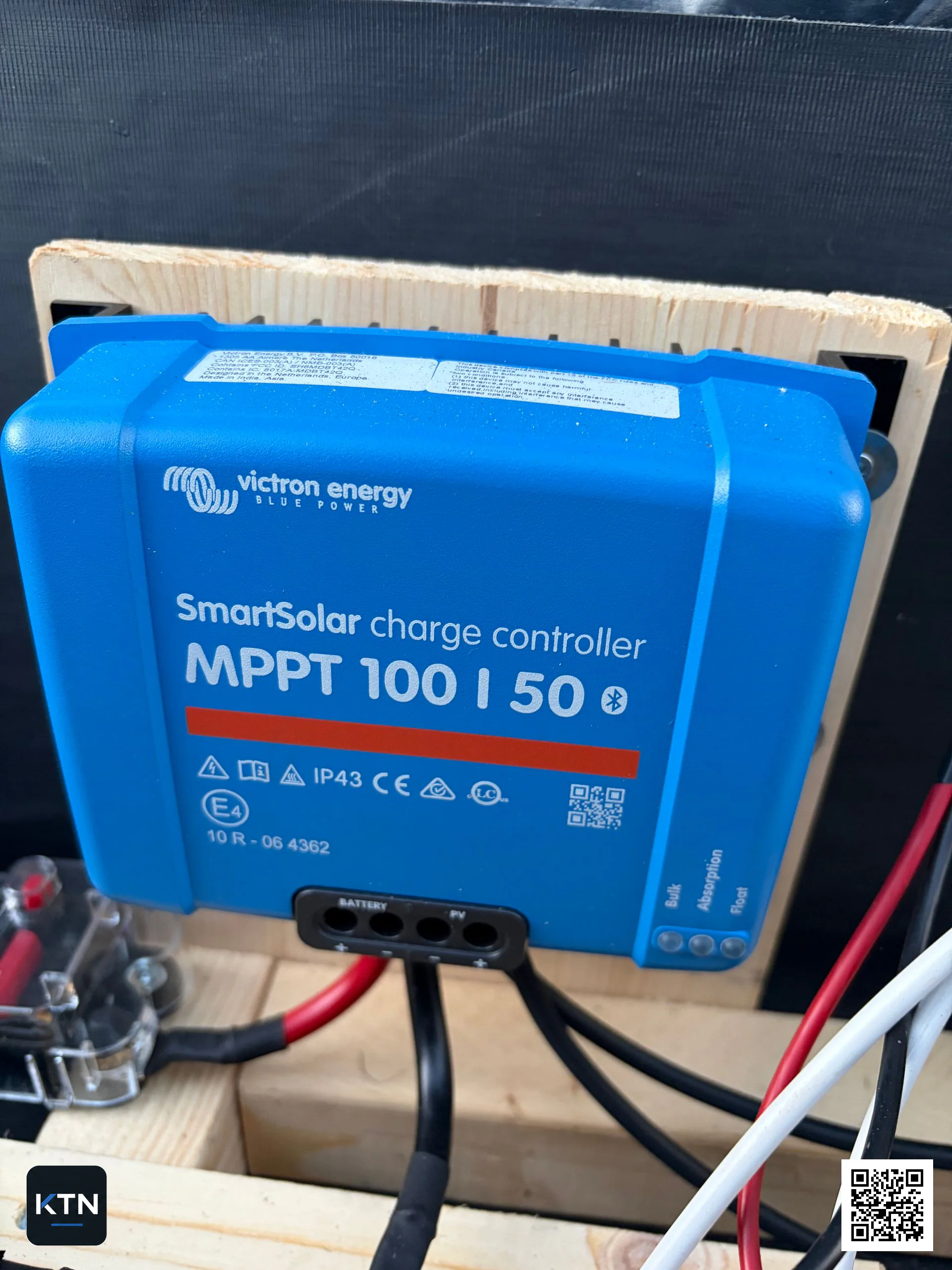
MPPT charge controller
An MPPT charge controller takes in the high voltage from the panel and converts it to battery voltage, while the current increases accordingly. A simpler PWM controller would pull the panel voltage down toward the battery voltage and would therefore not use the panel’s available power as well.
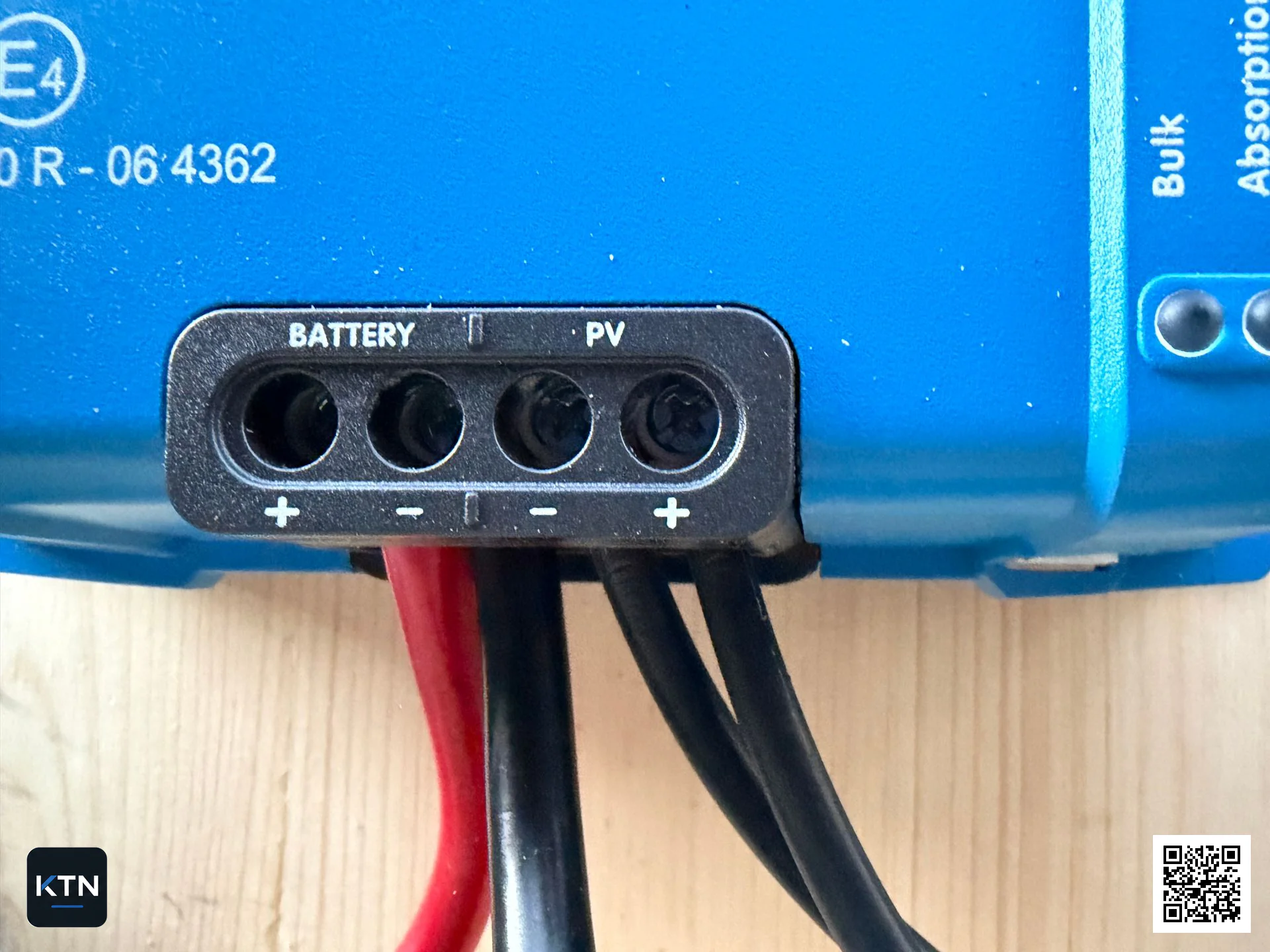
I chose the Victron SmartSolar MPPT 100/50. It has a maximum PV voltage of 100 V and can charge at up to 50 A. Victron specifies 700 W of solar power for 12 V.
- Voltage: Voc increases when the panel gets cold. The controller’s maximum PV voltage must therefore be assessed with a good margin, not just based on the value at standard test conditions. With 49.3 V against the controller’s 100 V, I have a good margin.
- Current: 450 W at around 14 V battery voltage gives roughly 32 A, compared to the controller’s 50 A.
When sizing the cables between the controller and the battery, voltage drop is also worth checking. I have a dedicated 12 V voltage drop calculator for this.
I also considered the SmartSolar 100/30. It is rated for 440 W of solar power at 12 V, which is roughly at the limit of my 450 W panel. The 100/50 gave more margin, and there is room for a bit more power later.
I chose the SmartSolar version because Bluetooth and VictronConnect make it easy to follow production and charging.